By 2012, Rogers & Willard had outgrown our longtime office in Crichton. I told my partner Steve Willard that I thought we should move downtown. He agreed and said, "Find us a building." Finding one wasn't difficult — downtown Mobile had plenty of empty buildings.
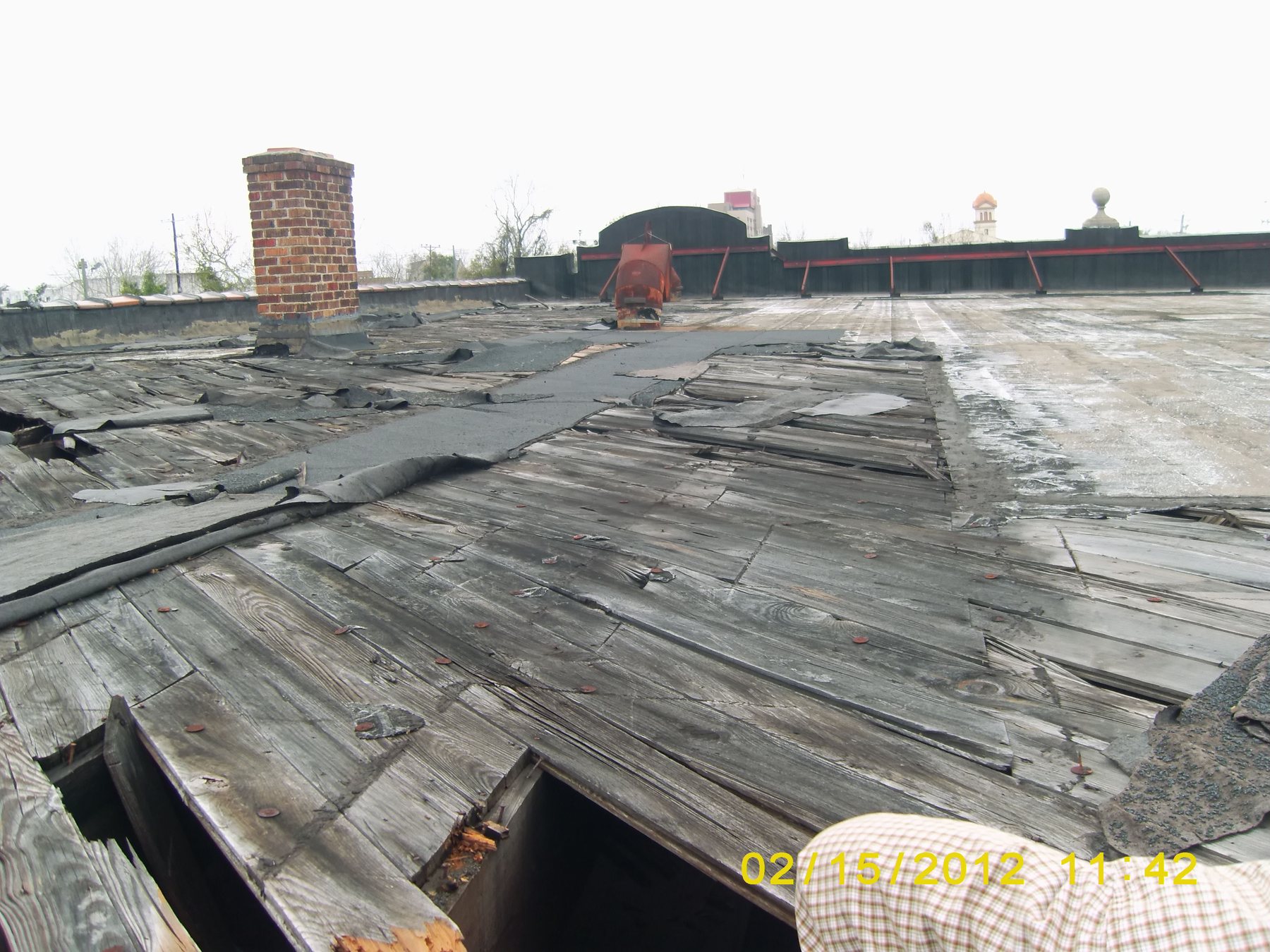
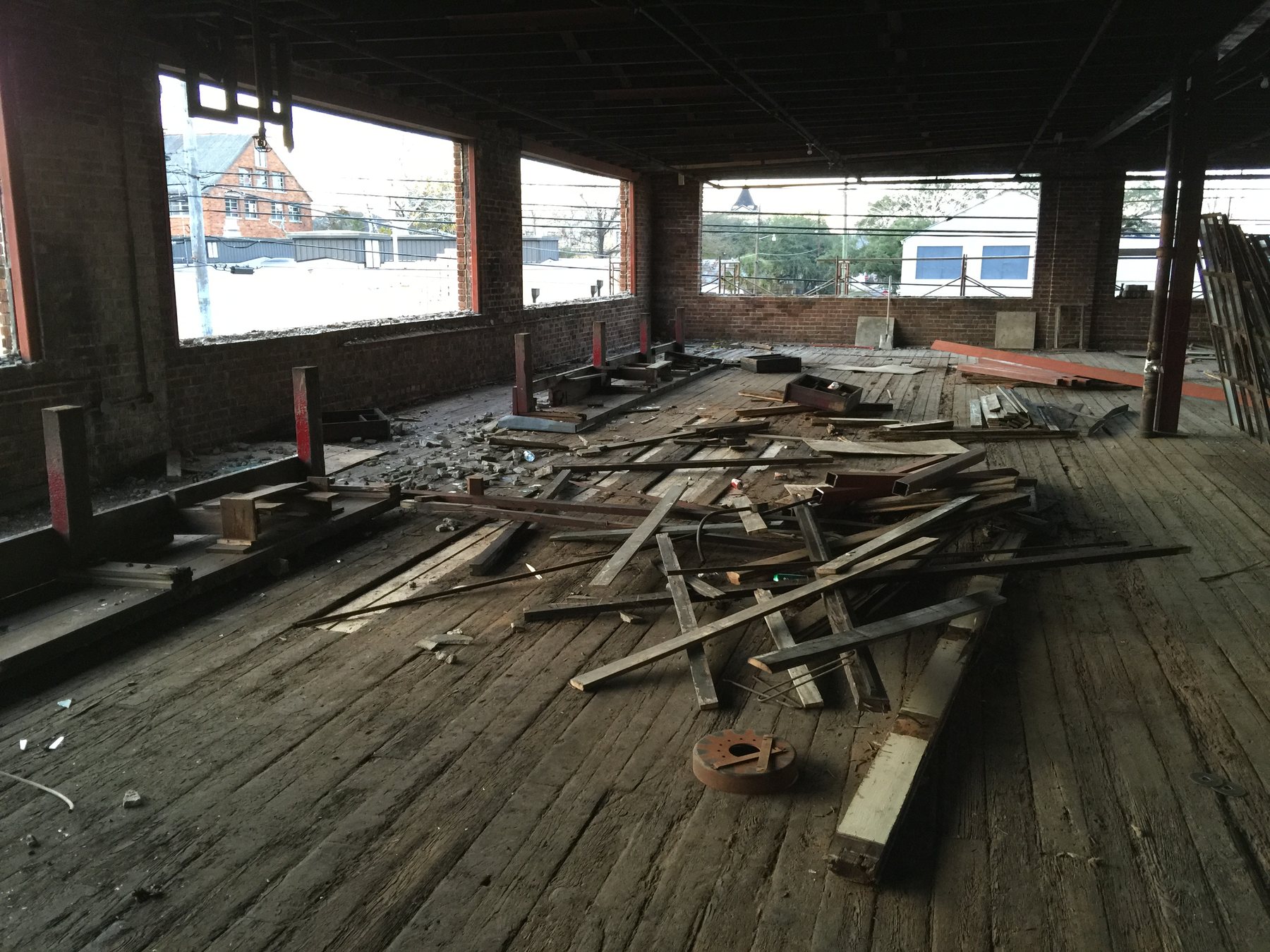
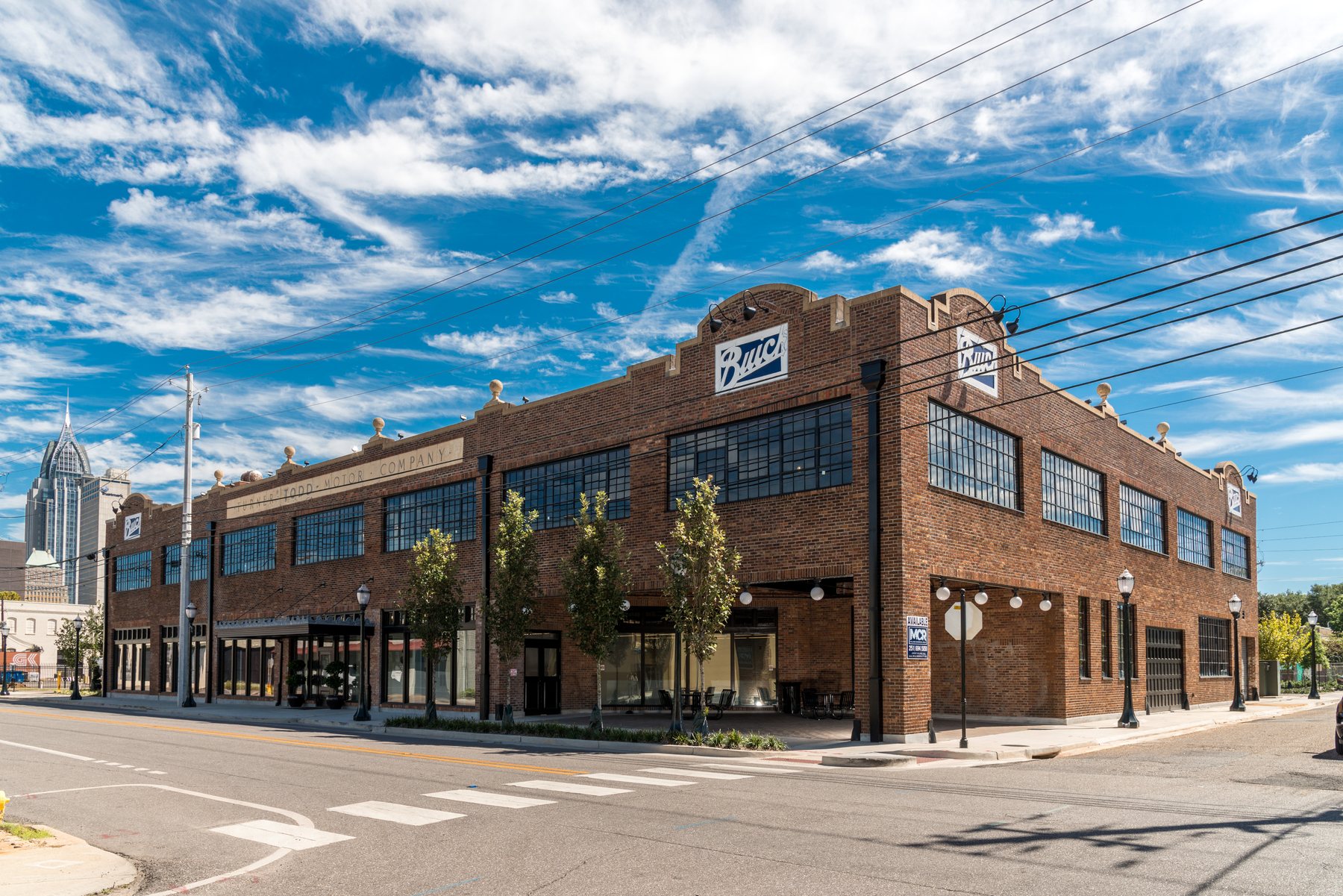
One caught my attention: the Buick Building, a nearly 40,000-square-foot former automobile dealership on St. Louis Street. Built in 1926 for the Turner-Todd Motor Company, it stood on what had once been Mobile's "Automobile Alley." By the time I found it, the building had been vacant for about fifteen years. Portions of the roof were missing, deterioration had spread throughout the structure, and much of St. Louis Street had fallen into decline.
We bought the building and nearly a full city block for about $220,000. Figuring out how to pay for the extensive restoration was another matter — until Rural Sourcing, an Atlanta technology company looking to establish a Mobile operation, agreed to lease a substantial portion of the building if we restored it. Suddenly, the numbers began to work.
We preserved the pieces that told the building's story — the concrete automobile ramp to the second floor, exposed heavy-timber framing, and original wood floors — while creating contemporary offices for both Rural Sourcing and Rogers & Willard. Historic tax credits, City Tax Increment Financing grants, and AlabamaSAVES energy financing were all crucial in making the project viable. We moved in during 2015.
But the Buick Building became much more important than our new office. Other buildings along St. Louis Street began coming back. Businesses arrived. Investment followed. Automobile Alley became a historic district, and the City eventually committed millions of dollars to major streetscape improvements.
I remember standing on St. Louis Street one morning and seeing a young woman jogging past. That sounds insignificant, but it wasn't. People don't run where they don't feel safe. Something had changed. The Buick Building taught me that a building can be more than a building — one well-placed investment can help people see an entire street differently.